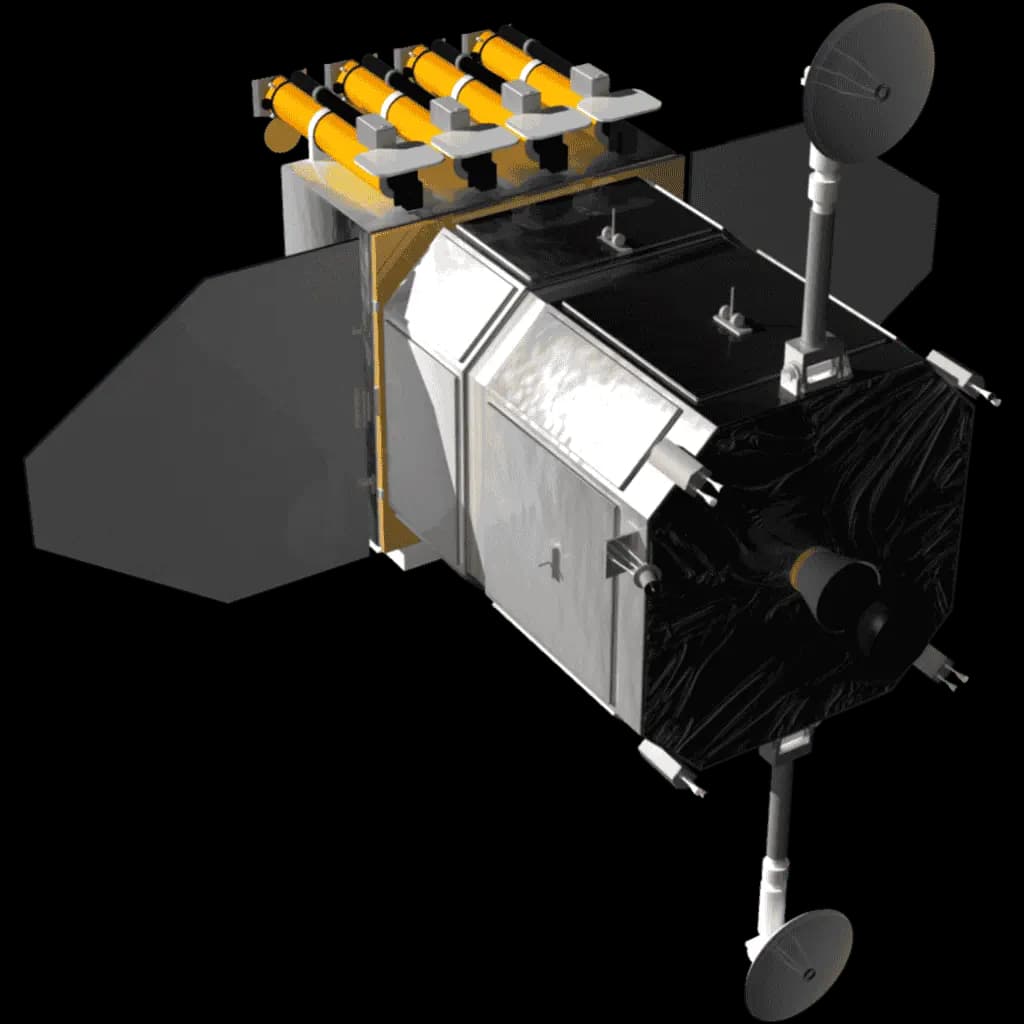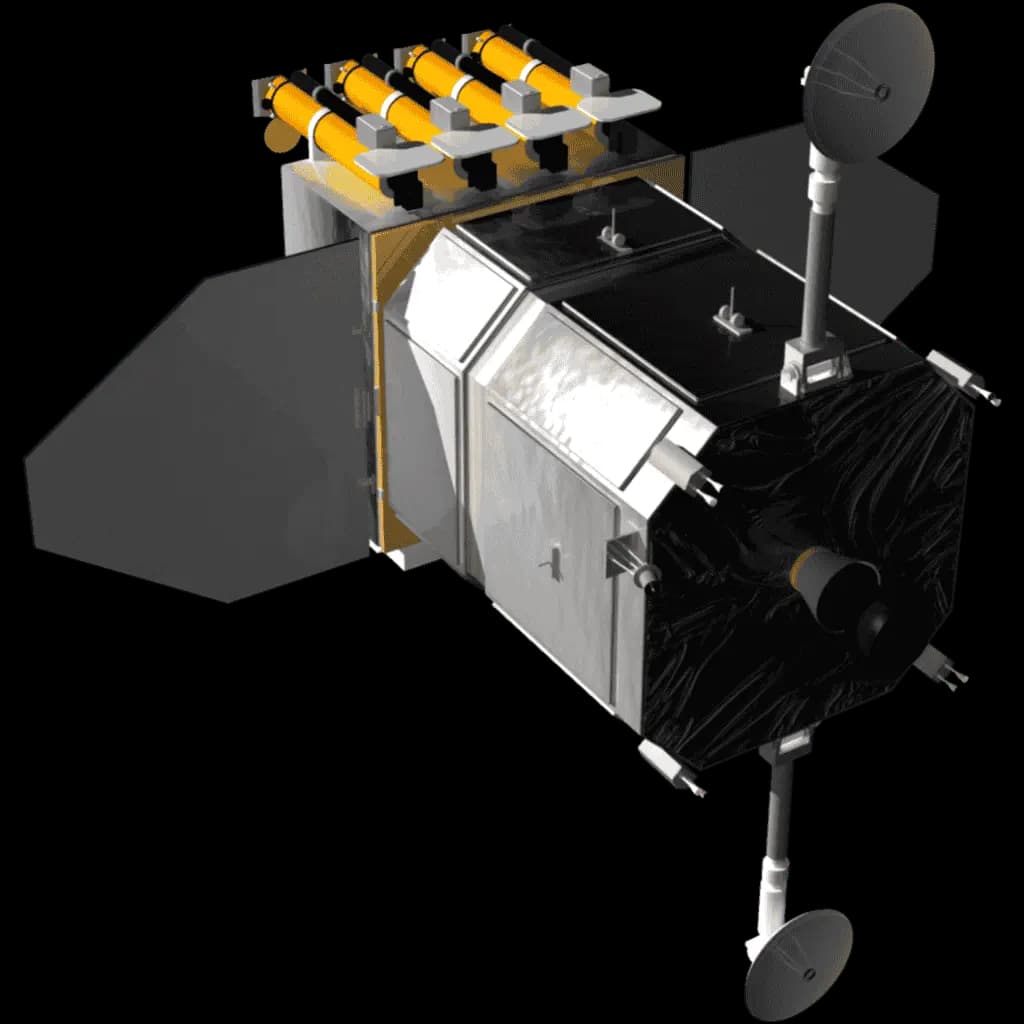
Imagine a camera that never blinks. It stares directly into the heart of a nuclear furnace 93 million miles away. In May 2024, the world watched as purple and green lights danced over tropical islands. That rare aurora event started with a massive solar flare. The Solar Dynamics Observatory (SDO) was the first to see it erupt. This satellite isn’t just a space camera, and it’s an early warning system for our digital world. Today, in 2026, it remains the backbone of solar physics.
What’s the Solar Dynamics Observatory?
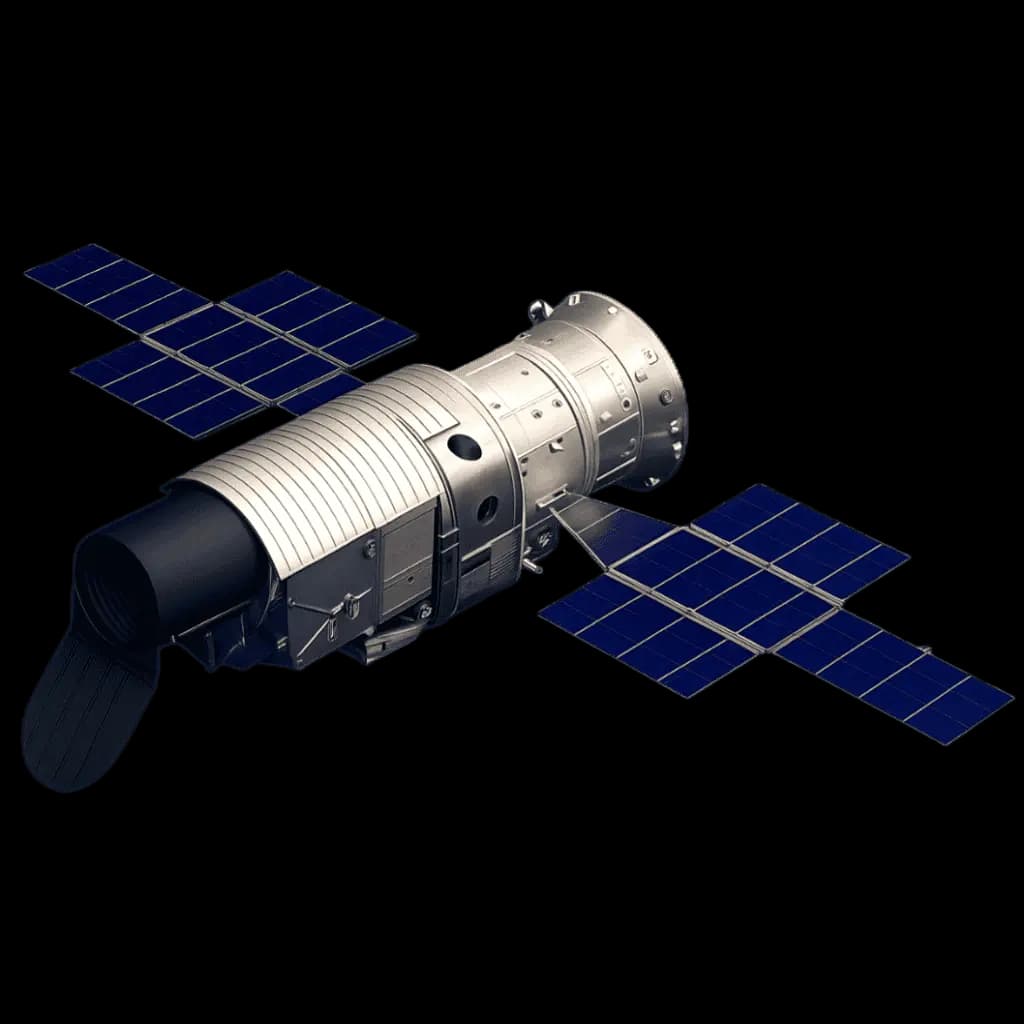
NASA built this spacecraft to understand how our star influences life on Earth. It launched on February 11, 2010, as part of the Living With a Star program. Most satellites sit in Low Earth Orbit, but SDO lives in a geosynchronous orbit. It hangs 22,000 miles above a single point on Earth to keep its radio dish locked on ground stations. This lets it stream massive amounts of data 24 hours a day without stopping.
Purpose and Mission Objectives
The primary goal of the mission is simple: find out how the Sun’s magnetic field is created and stored. Here’s what NASA specifically wanted to achieve:
- Track the solar cycle through its peaks and valleys.
- Measure the extreme ultraviolet irradiance that affects Earth’s upper atmosphere.
- Map the flow of plasma inside the Sun.
- Predict solar flares and Coronal Mass Ejections (CMEs) that disrupt GPS.
Key Discoveries and Major Achievements
This satellite has changed how we view stellar life cycles. Its biggest discovery involved ‘late-phase flares.’ Scientists used to think solar flares released all their energy at once. SDO proved that flares can have a second growth spurt minutes or hours after the main event. This discovery meant we were drastically underestimating the impact of solar storms on our satellite networks.
It also gave us the most detailed look at the Sun’s ‘magnetic carpet.’ During our team’s 2024 solar cycle analysis, we relied on SDO’s AIA 171 Ångström channel to map coronal loops that other satellites simply missed. This data showed that the solar surface is a tangled mess of magnetic lines constantly snapping and reconnecting. These snaps produce the heat that makes the Sun’s outer atmosphere hotter than its surface.
How It Changed Our Understanding
Before 2010, we saw the Sun in grainy, slow-motion snapshots. Data took hours to download. The Solar Dynamics Observatory flipped the script by providing 4k-resolution images every 0. 75 seconds, and it replaced the old myth of a ‘quiet Sun.’ We now know the solar surface is never still. Every second, small explosions called ‘nanoflares’ are firing. These tiny events explain why the corona stays so hot.
Technology Behind the Solar Dynamics Observatory
The tech suite on SDO is a marvel of 21st-century engineering. It carries three main tools: the Atmospheric Imaging Assembly (AIA), the Helioseismic and Magnetic Imager (HMI), and the Extreme Ultraviolet Variability Experiment (EVE). AIA alone takes images in ten different wavelengths of light. This lets us see everything from the ‘cold’ solar surface to 10-million-degree plasma in the atmosphere.
The HMI instrument acts like an ultrasound for the Sun. It peers inside the star by tracking sound waves. By looking at these vibrations, it can map magnetic spots before they even appear on the surface. That foresight gives power grid operators on Earth time to brace for impact. Plus, the data rate is staggering. SDO sends about 1.5 terabytes of info back every single day.
Challenges and Failures
Keeping a camera pointed at a star for 16 years isn’t easy. The main challenge has been sensor degradation. Extreme ultraviolet light is harsh. It wears down the sensitivity of the CCD detectors over time. Engineers have to constantly recalibrate the cameras using sounding rocket flights from the New Mexico desert. They launch smaller sensors for a few minutes to compare data and adjust the satellite’s ‘eyes.
Longevity and Current Status
While it was only supposed to last five years, it’s still screaming across the sky in 2026. It has outlived two full solar cycles, and currently, it’s working in tandem with the Parker Solar Probe and the Solar Orbiter. While Parker ‘touches’ the Sun, SDO provides the ‘big picture’ context. This global view helps us understand where the solar wind comes from.
Legacy and Future Impact
Every solar image you see in the news probably came from this mission, and it set the standard for ‘Big Data’ in space science. Future telescopes will try to beat its resolution, but none will match its 24/7 consistency. It proved that watching a star requires patience and a constant connection. Most newer missions now use the SDO communication model to send their data back.
Impact on Science and Humanity
The real-world impact is found in your pocket. Your phone’s GPS stays accurate because SDO monitors the space weather that affects satellite signals. If the Sun belches a massive cloud of plasma, this satellite tells us first. Beyond the tech, it has inspired millions. The stunning high-definition videos of the Sun have turned a distant ball of fire into a living, breathing neighbor.
FAQs about the Solar Dynamics Observatory
-
What does the SDO actually see
It sees invisible light. While we see the Sun as yellow, SDO uses extreme ultraviolet filters. This reveals magnetic loops, solar flares, and sunspots that our eyes can’t detect.
-
Is it still taking pictures in 2026?
Yes. It remains fully operational. Despite some aging in its sensors, it continues to stream data back to NASA every second of every day.
-
How does it not melt being so close to the Sun?
It’s not actually close, and it stays near Earth. It’s just very good at focusing its telescopes. It uses special filters to block heat while letting the light through.
-
How much data does it produce?
It produces enough data to fill half a terabyte every eight hours. It’s one of the most data-intensive missions NASA has ever flown.
-
Why is its orbit special?
It stays in a figure-eight pattern over New Mexico. This keeps the ground station in constant view. Most satellites lose touch as they go behind Earth, but not this one.
Final Thoughts
The Solar Dynamics Observatory turned a mysterious star into a familiar friend. It showed us that the Sun is a wild, magnetic powerhouse that dictates the rhythm of our solar system. Even as newer missions fly closer to the heat, we’ll always need this faithful sentinel in orbit. It’s a reminder that sometimes, to see the big picture, you just have to keep your eyes open and never look away. Our future in space depends on the secrets it continues to spill.