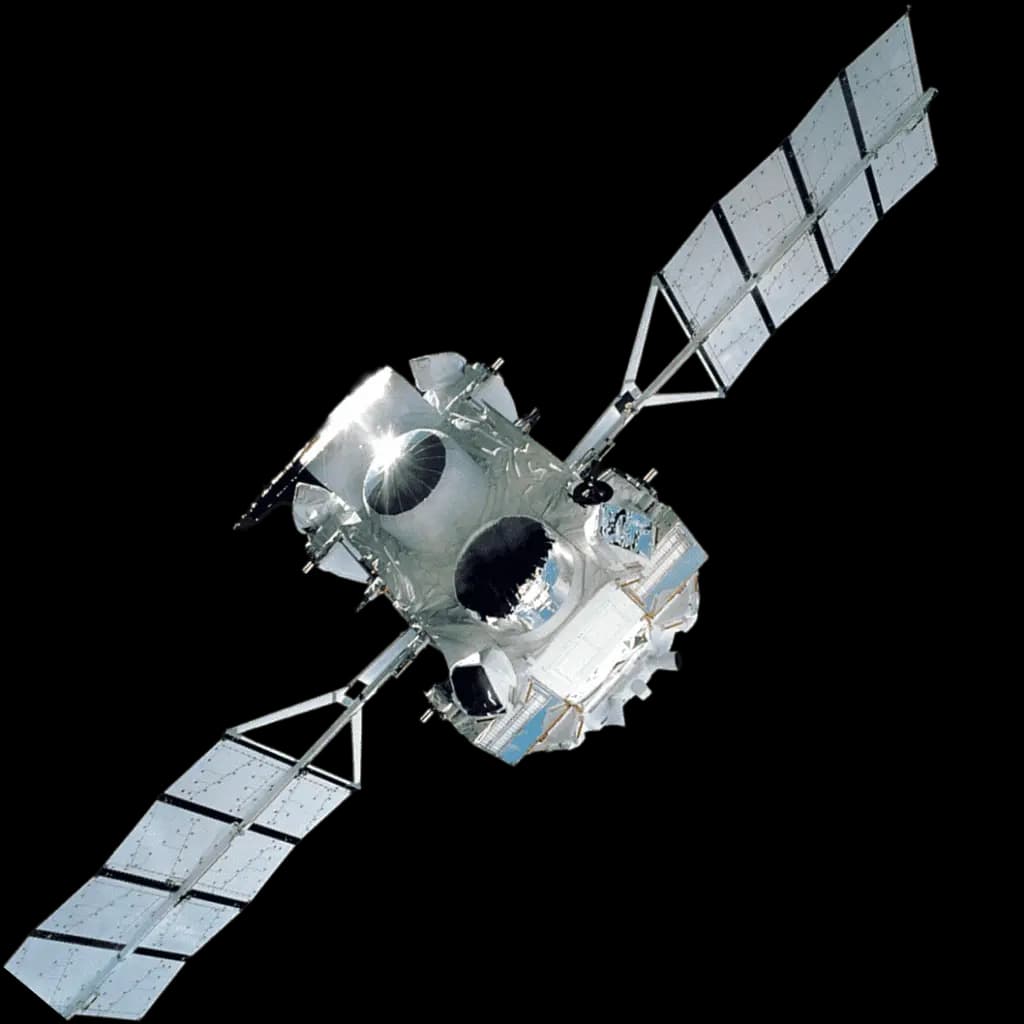
Imagine a burst of energy brighter than an entire galaxy flashing across the void in less than a second. In 1991, the space shuttle Atlantis roared into the sky to deploy the Compton Gamma Ray Observatory, a massive satellite designed to catch these invisible killers. This 17 ton titan was the second of NASA’s Great Observatories. It gave us eyes to see the universe’s most violent events. Today, in 2026, scientists still use its catalog of cosmic explosions to build our modern models of the deep sky.
What’s the Compton Gamma Ray Observatory?
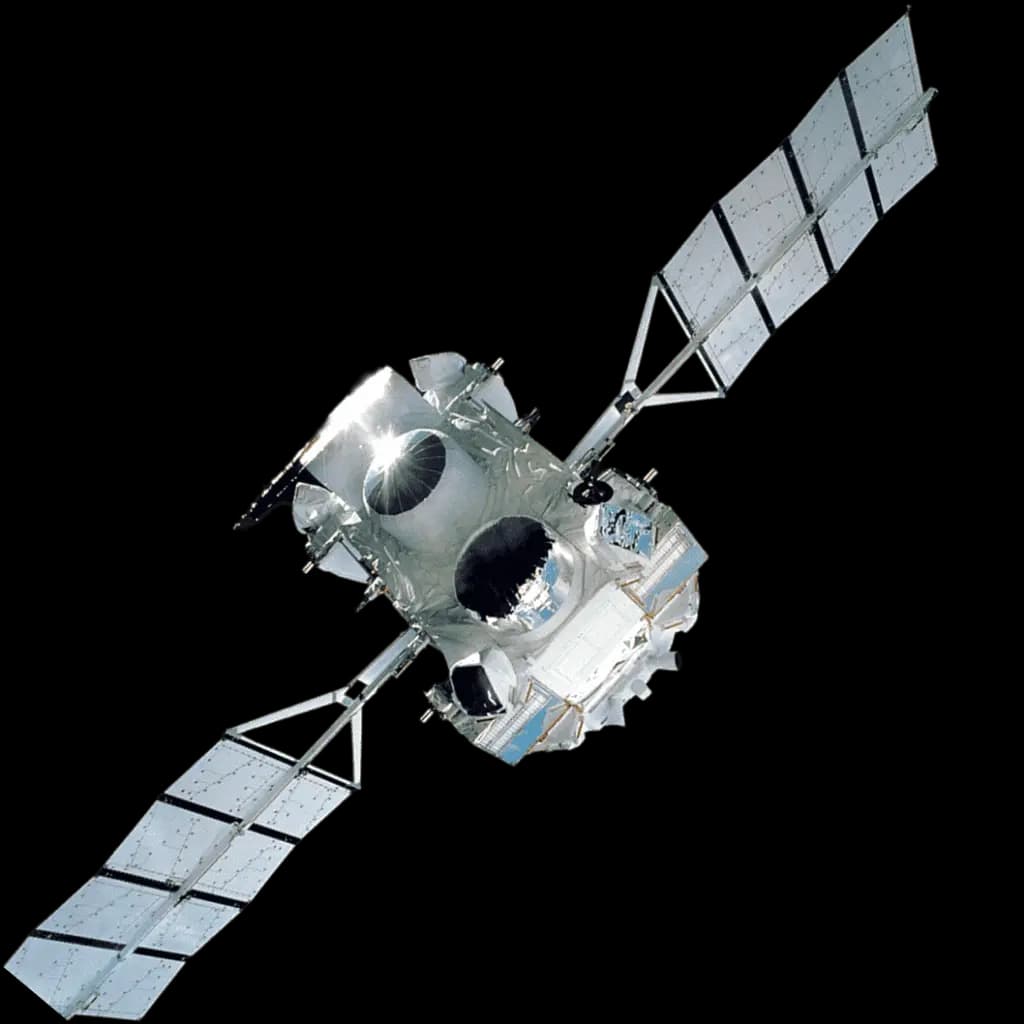
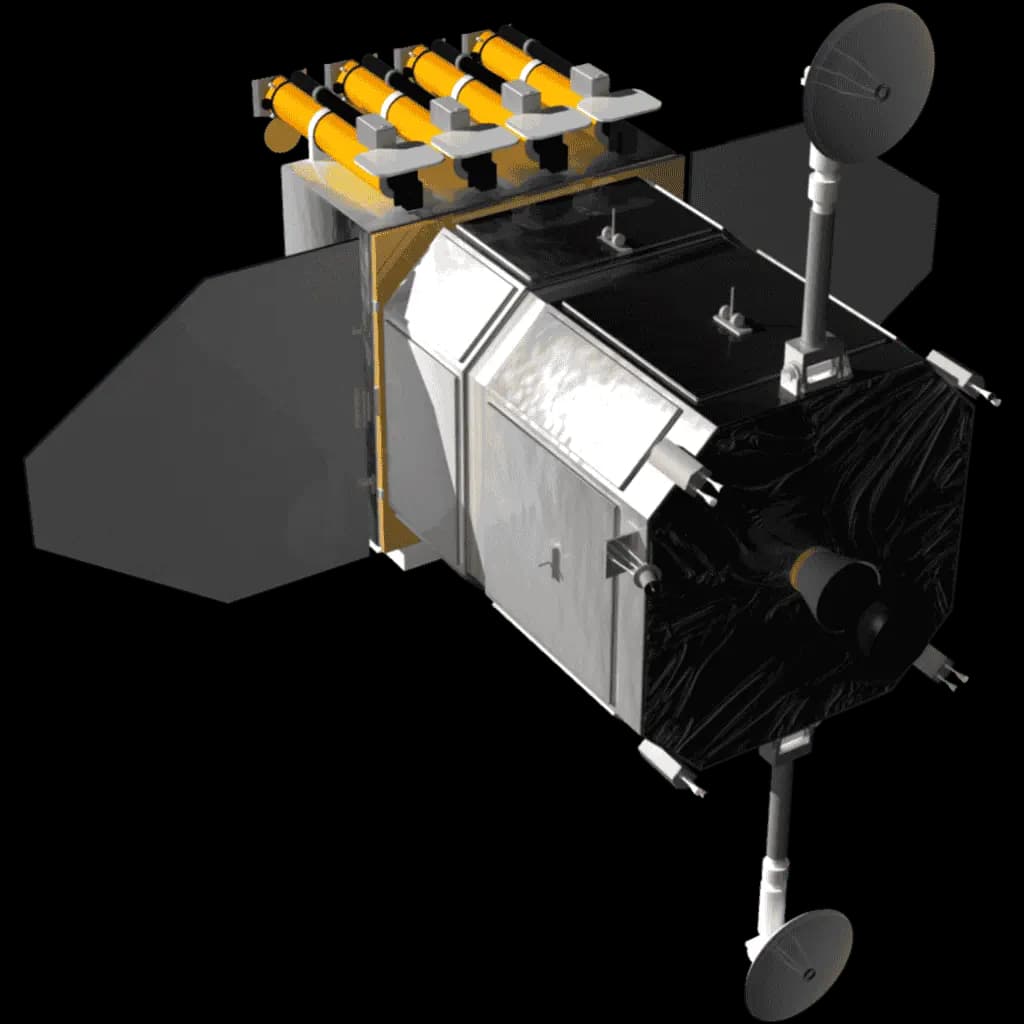
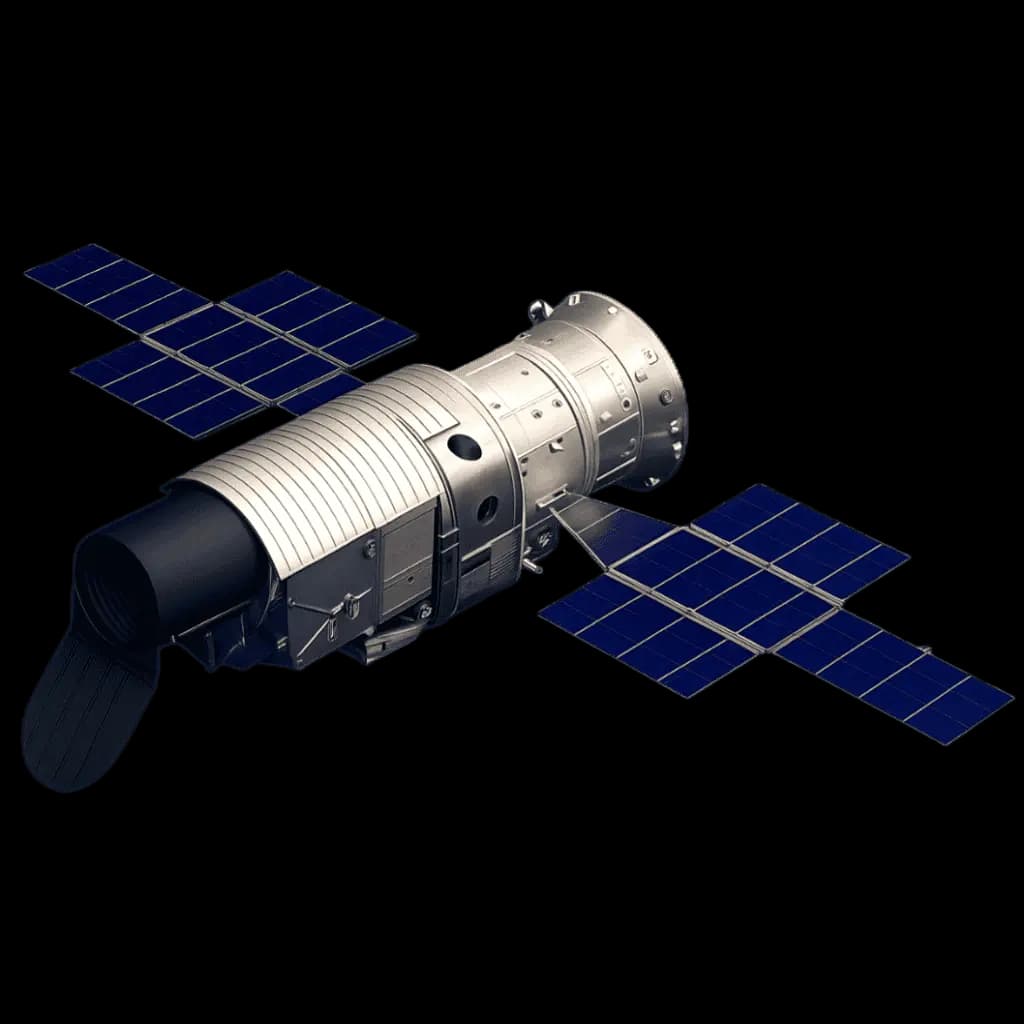
NASA built this giant craft to map the sky in high-energy gamma rays. They launched it on April 5, 1991, into a low Earth orbit. It wasn’t just a small camera: it was about the size of a school bus. While telescopes like Hubble look at visible light, this machine looked at things humans can’t naturally see. It’s part of a famous four-satellite group that explored every wavelength of light.
Purpose and Mission Objectives
NASA had clear targets for this mission. The team wanted to understand the ‘big booms’ of space that don’t produce much visible light but emit massive radiation.
- Survey the whole sky in high-energy photon emissions.
- Find the source of mysterious Gamma Ray Bursts (GRBs).
- Map radioactive elements created during stellar explosions.
- Observe massive black holes at the centers of distant galaxies.
- Record solar flares with incredible detail.
Key Discoveries of the Compton Gamma Ray Observatory
One big find involved Gamma Ray Bursts. Before this satellite, we thought these flashes came from inside our Milky Way galaxy. I recall seeing the data where the BATSE instrument showed these bursts happening everywhere in the sky. This proved they occur in far-off galaxies. It showed us that the universe is way more violent than anyone suspected. These flashes actually release more energy in seconds than our sun does in billions of years.
Second, it found dozens of blazars, and these are massive black holes that shoot jets of plasma right at Earth. It also created the first high-energy map of the whole sky. Scientists found sources of gamma rays they couldn’t even name yet. Plus, it showed us how antimatter forms near the center of our galaxy. Those results laid the foundation for our current 2026 theories on dark matter and energy.
How the Compton Gamma Ray Observatory Changed Our Understanding
Before this mission, scientists were just guessing about high-energy space. Many experts believed GRBs were rare and local. But the mission changed everything by showing a uniform spread across the sky. This meant these events were happening all over the deep universe. It forced every astrophysicist to rethink their math. They had to explain how something could be that bright from so far away.
Another myth involved the centers of galaxies. We knew black holes existed, but we didn’t know they were so active in gamma rays. The observatory showed us ‘active galactic nuclei’ (AGN) spitting out radiation like firehoses. We went from seeing a quiet, static sky to a dynamic, exploding universe, and our current ‘multi-messenger’ era of science started right here.
Technology Behind the Compton Gamma Ray Observatory
The spacecraft carried four huge instruments to cover many energy. BATSE acted as the scout, looking for sudden flashes from any direction. OSSE studied the middle energies, focusing on specific targets. COMPTEL was unique because it used liquid layers to track photon paths. Finally, EGRET took on the highest energies, detecting sparks that carry millions of times more energy than light. These sensors didn’t use mirrors like Hubble because gamma rays pass right through them. Instead, they used heavy crystal blocks and gas chambers.
Challenges and Failures
It wasn’t a perfect flight. One of the antennas stuck during the launch. Astronauts Jerry Ross and Jay Apt had to do an unplanned spacewalk to shake it loose by hand. Later on, one of the gyroscopes failed. This isn’t a small problem for a craft that needs to point at stars. But the ground team was clever. They found ways to fly the satellite using other sensors. This helped it survive years past its original life.
Longevity and Current Status
The mission lasted nine years, which was double its planned time. NASA made a tough choice in June 2000. They decided to bring it down while it was still somewhat controllable. If another gyro failed, it might have fallen over a city. They steered it into a remote part of the Pacific Ocean. While the physical craft is gone, the data lives in digital vaults. In 2026, we’re still cleaning that old data with new AI tools to find things we missed.
Legacy and Future Impact
Modern satellites like Fermi and Swift exist because this mission succeeded. It proved that space-based gamma-ray hunting works. Today’s telescopes are smaller and lighter, but they use the same basic physics CGRO pioneered. Every time you hear about a ‘pulsar’ or a ‘black hole merger,’ remember that this observatory found them first. It basically wrote the dictionary for high-energy physics.
Impact on Science and Humanity
Public interest in space changed because of those early maps. People saw that the sky isn’t just a collection of peaceful stars. It’s a place of incredible power. It pushed young students in the 1990s to become the astrophysicists we have today. The satellite taught us that Earth’s atmosphere protects us from these rays, making life possible. It was a giant shield that let’s peek outside our bubble.
FAQs About Compton Gamma Ray Observatory
-
How big was the satellite?
It weighed 17 tons and was roughly 30 feet long. It’s still one of the heaviest civilian objects ever put into orbit. Scientists needed the heavy weight because gamma-ray detectors require dense materials like lead or crystal to stop radiation.
-
Is the Compton Gamma Ray Observatory still in space?
No, NASA deorbited it in 2000. It burned up in the atmosphere and its remains landed in the ocean. This was a safety measure to prevent it from crashing into populated areas on its own later.
-
Why is it called ‘Compton’?
NASA named it after Arthur Holly Compton. He was a Nobel-winning physicist who studied how photons interact with electrons. His work is the reason we can detect gamma rays today.
-
What was its most important discovery?
The most famous win was proving Gamma Ray Bursts come from deep space. Before the mission, we didn’t know if they were from our neighborhood or the far edges of the universe. This discovery changed physics forever.
-
Does it help us in 2026?
Yes. Modern AI models train on its old datasets. We use its original sky maps as a ‘ground truth’ to see how sources like pulsars or blazars have shifted over the last 35 years.
Final Thoughts
Space isn’t as quiet as it looks through a backyard telescope. The Compton Gamma Ray Observatory pulled back the curtain on a violent, sparkling universe of radiation. It showed us that we live in a cosmic shooting gallery of energy. This massive machine proved that by looking at the invisible, we learn the most about our place in the stars. Let’s keep looking up, even when we can’t see what’s watching us.