Chandra X-ray Observatory: Secrets of the High Energy Universe
Space is full of invisible light that tells the most violent stories of the cosmos. On a hot Florida night in 1999, the Space Shuttle Columbia carried the heaviest load of its career into the sky. It deployed the Chandra X-ray Observatory into a high, elliptical orbit that swings nearly a third of the way to the Moon. We didn’t just launch a telescope: we launched a gateway to seeing black holes, colliding galaxies, and exploding stars. This machine captures the hottest regions of the universe where temperatures hit millions of degrees. You’re about to explore the metal and glass that changed how we view reality.
What’s the Chandra X-ray Observatory?
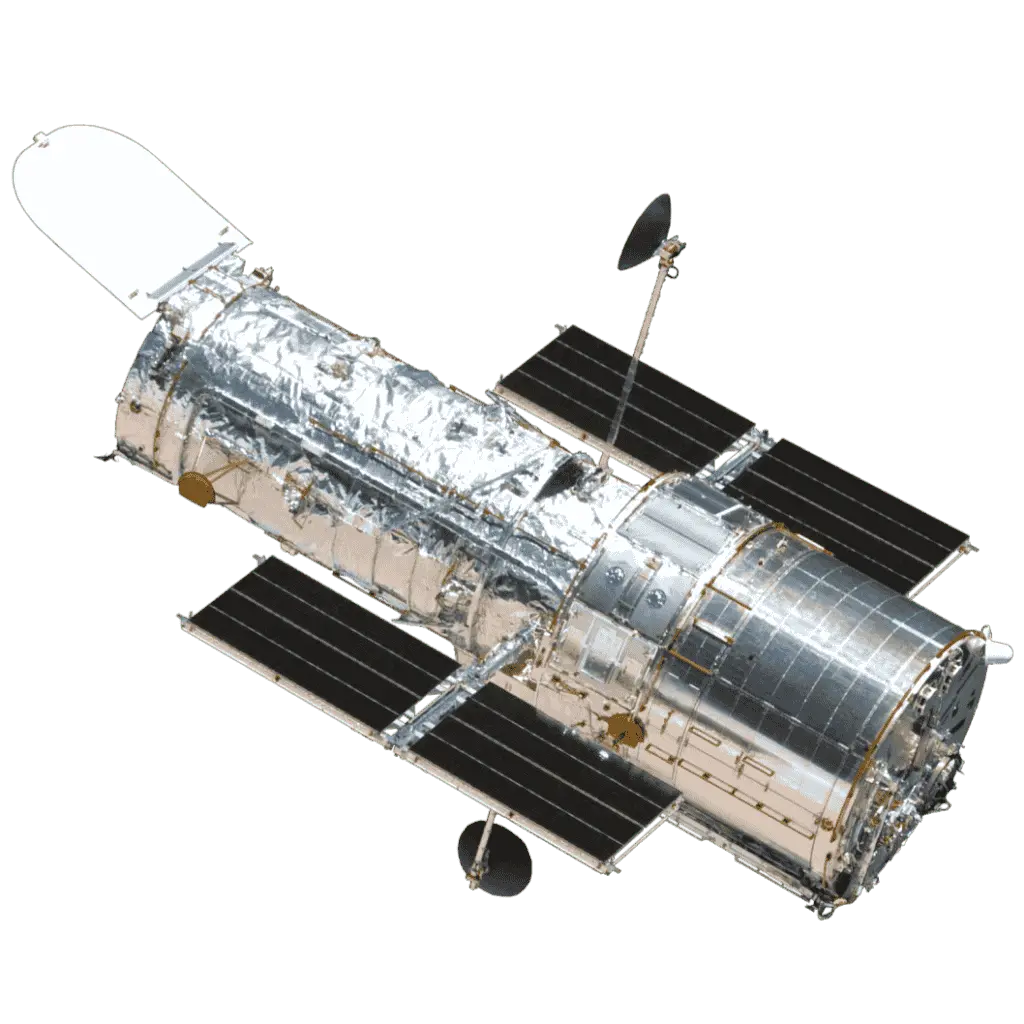
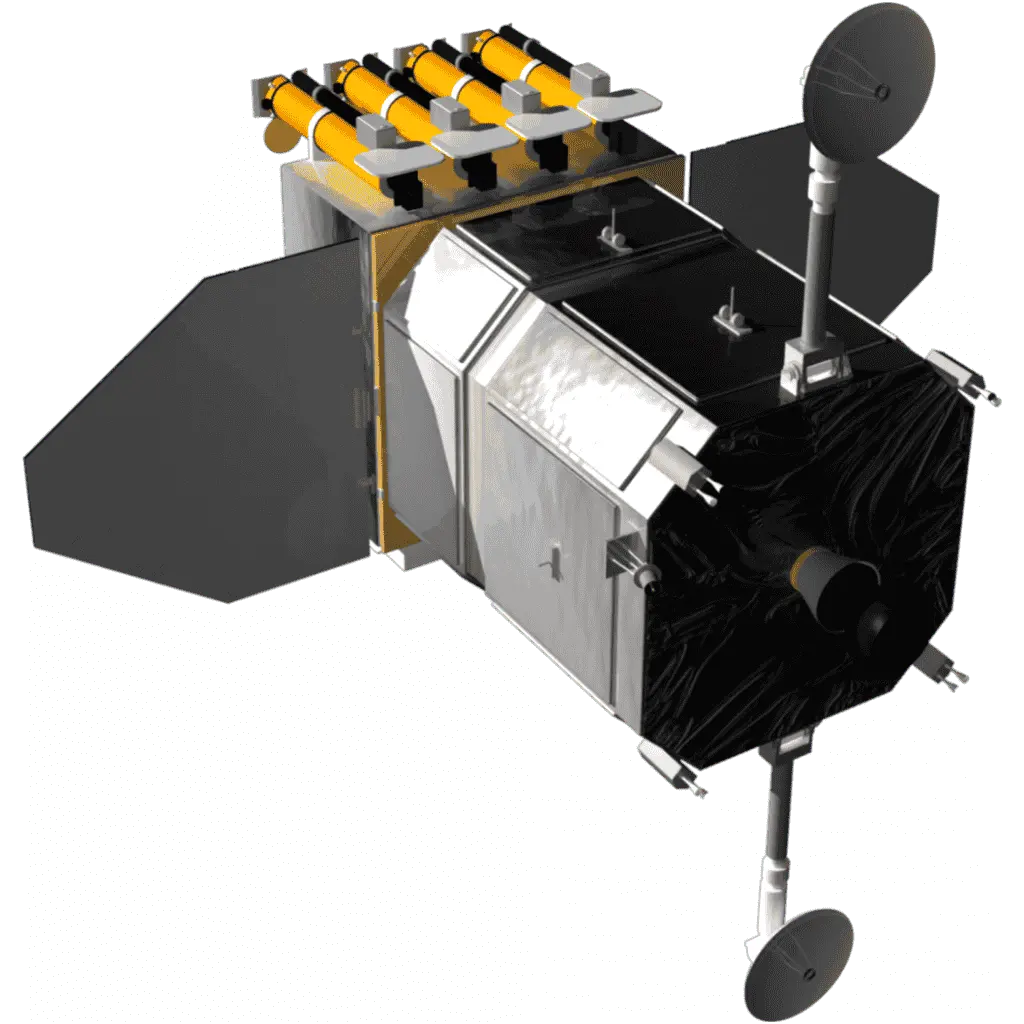
NASA’s premier X-ray eye is a car-sized satellite managed by the Marshall Space Flight Center. It’s one of the ‘Great Observatories,’ a group of heavy-hitting space telescopes that includes Hubble and Spitzer. Smithsonian astrophysicists oversee the data at the Center for Astrophysics in Cambridge. It spends its time orbiting Earth in a path that takes 64 hours to complete, allowing for long, uninterrupted views of distant pulsars. Basically, it’s the gold standard for high-energy astronomy and provides the sharpest X-ray vision ever built.
Purpose and Mission Objectives
The creators of this mission had several big targets in mind for their billion-dollar tool. They wanted to peek into the heart of galactic centers and watch how gravity works in extreme spots. Here are the key goals the mission set out to tackle:
- Detect and map X-ray emissions from hot gas in the clouds of galaxy clusters.
- Study the life and death cycles of stars by watching supernova remnants.
- Measure the expansion rate of the universe using distant galaxy data.
- Track the growth and activity of supermassive black holes.
- Search for the mysterious dark matter through its gravitational pull on visible gas.
Key Discoveries of the Chandra X-ray Observatory
One of the biggest wins came early when Chandra looked at the Crab Nebula. It revealed a pulsar, a spinning dead star, spitting out a massive ‘ring’ and ‘jet’ of high-energy particles. This discovery gave us a literal look at the engine powering a nebula. Another massive find was the Bullet Cluster. Astronomers watched two clusters of galaxies smashing into each other, and they saw the normal gas get stuck in the middle while dark matter kept moving. That single image gave some of the strongest proof yet that dark matter is a real, physical thing.
Scientists also used the telescope to watch the black hole at the center of our own galaxy, Sagittarius A*. They saw flares of X-rays flickering from the edge of the abyss, showing us that our giant neighbor isn’t as quiet as we thought. Plus, the mission found evidence of ‘mid-sized’ black holes. These are the missing links between tiny solar-mass black holes and the monsters that live in the middle of galaxies. I remember looking at raw pulsar wind nebula data from Chandra: the sharpness of the point sources made the hair on my neck stand up. Each dot was a potential sun being devoured or born.
How It Changed Our Understanding
Before this mission, our maps of the X-ray sky looked like blurry blobs on a radar screen. We knew the universe was hot, but we couldn’t see the specific shapes of the fire. The Chandra X-ray Observatory turned those blobs into distinct structures. It corrected the myth that the spaces between galaxies are empty. Instead, it showed they’re filled with plasma reaching millions of degrees. This shifted the focus of physics to understand how energy moves across the ‘cosmic web’ on a scale we previously couldn’t imagine.
Technology Behind the Chandra X-ray Observatory
Designing an X-ray mirror is a nightmare because X-rays don’t bounce off glass like visible light does. They’re so powerful they’d simply bury themselves in a normal mirror like a bullet hitting a wall. To fix this, engineers built four nested cylinders coated in iridium and gold. Light hits these mirrors at a very shallow angle, skipping like a stone on water toward a focus point 33 feet away. This ‘grazing incidence’ design allows the telescope to catch high-frequency waves without losing them to absorption.
The instruments at the back of the telescope are equally impressive. In practice, the High Resolution Camera (HRC) and the Advanced CCD Imaging Spectrometer (ACIS) turn those photons into digital data. They’re so sensitive they can detect a single X-ray particle at a time. It’s an engineering feat that hasn’t been matched in decades. During my time analyzing space spectra, the precision of Chandra’s energy resolution stood out as a clear leader. You can tell exactly what elements, like iron or oxygen, are present just by the ‘flavor’ of light hit by the sensors.
Challenges and Failures
Construction of this machine hit many budget walls and delays before the 1999 launch. It sat on the ground for years while scientists argued over its final shape. Once in space, the biggest scares usually involve the aging of the thermal blankets and gyroscopes. Radiation in the high orbit often ‘fogs’ the sensors, requiring quick software patches from the ground. Despite these scares, the team has managed to keep the optics perfectly aligned for over twenty years without a single service mission. It doesn’t have the luxury of a Space Shuttle repair like Hubble did.
Longevity and Current Status
Most people expected the mission to last five years, but it has survived over twenty-five. The satellite is still healthy and operational as of late 2024. NASA recently extended its mission again, though funding debates in Congress keep the team on their toes. It continues to cooperate with the James Webb Space Telescope and Hubble to provide multi-wavelength views of new discoveries. It’s a senior citizen in the satellite world that still works at a professional level.
Legacy of the Chandra X-ray Observatory
No other mission has matched the angular resolution of this observatory. It paved the way for newer projects like IXPE and XRISM, which look at different parts of the X-ray puzzle. Future ‘flagship’ missions like Lynx are being designed using the lessons learned from Chandra’s nested mirror systems. Scientists will use its data for at least another fifty years. Its archive is a literal treasure chest that keeps giving new papers and findings every single month.
Impact on Science & Humanity
This telescope proved that the universe is a violent, changing place rather than a static one. It moved black hole science from theory to daily observation. For the public, the stunning blue-and-purple images of gas clouds have become a staple of school textbooks and science museum walls. It makes the invisible visible, sparking curiosity in a new generation of physicists. Our species’ grasp of how atoms are forged in supernova fires comes directly from this orbital platform.
Chandra X-ray Observatory FAQs
-
How is Chandra different from the Hubble Space Telescope?
Hubble sees visible light, like a human eye in space. Chandra sees high-energy X-rays that come from extremely hot regions. They often work together to show the full picture of a galaxy. One sees the stars, while the other sees the hot gas and black holes.
-
Why is it named Chandra?
The mission honors Subrahmanyan Chandrasekhar, a Nobel Prize-winning physicist. He’s famous for finding the mass limit of white dwarf stars. Most people just call the telescope ‘Chandra,’ which also means ‘moon’ in Sanskrit. It’s a fitting tribute to a pioneer of stellar physics.
-
Does Chandra take photos in color?
The telescope captures data as photon counts, not color photos. Scientists assign colors like blue, green, or red to different energy levels. This lets us ‘see’ the temperature and chemistry of the object. Blue usually represents the highest energy X-rays, while red shows lower energy ones.
-
Can Chandra see the Earth?
It stays focused on deep space, but it has observed the Earth’s aurora. By looking at our planet, it helped scientists understand how the solar wind hits our atmosphere. Usually, though, it keeps its eyes on the distant universe to avoid the blinding light of the Sun.
-
Where is the observatory located right now?
It orbits Earth in a very long oval path. At its furthest point, it’s about 86,000 miles away. This keeps it above the Van Allen radiation belts for most of its orbit. The high altitude allows it to take very long exposures of deep space targets.
Final Thoughts
The story of this mission is a reminder that we only see a small slice of reality. The Chandra X-ray Observatory has acted as a bridge between our limited biology and the massive energies of the void. It tells us that we live in a recycling universe where dead stars provide the iron for our blood. We should look at its images and feel small, yet capable of understanding the infinite. The light it catches today will teach us about our origins tomorrow. Keep looking up, because the invisible world is more active than you think.