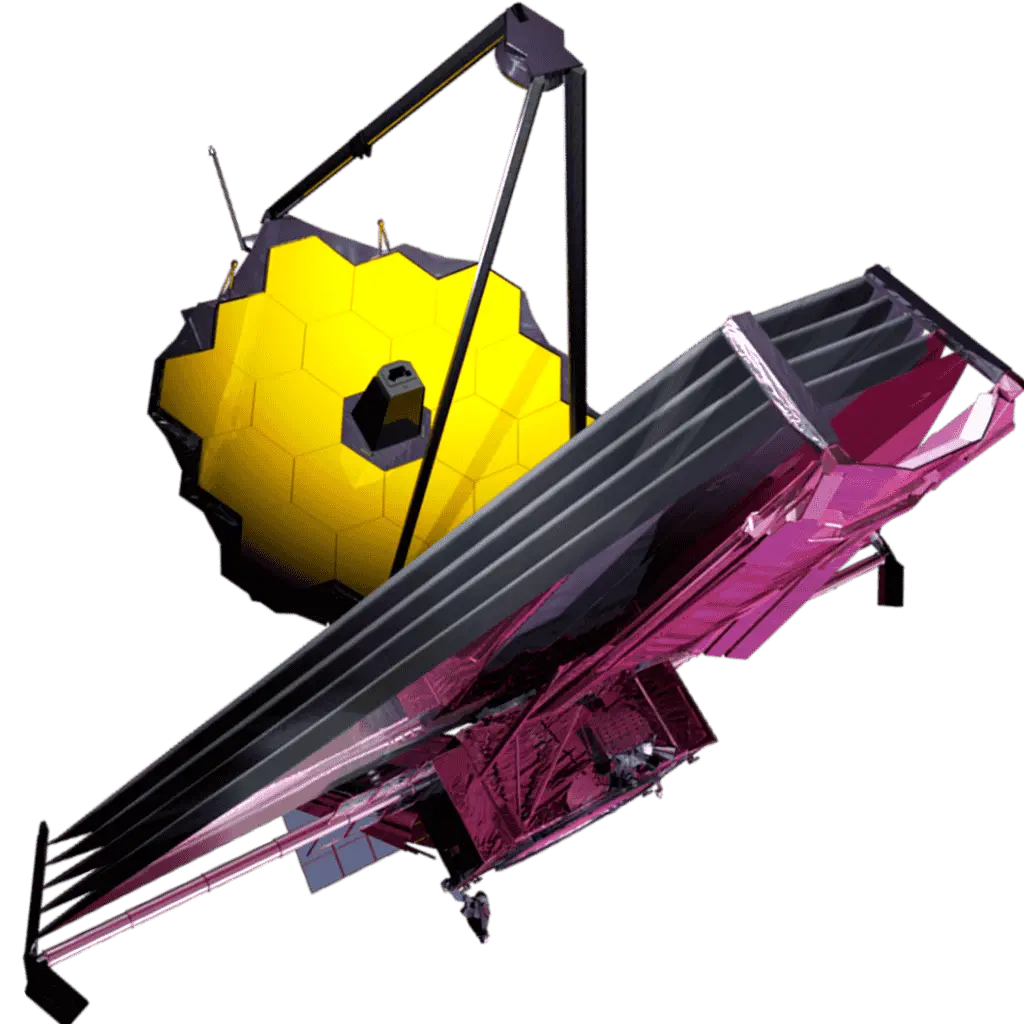
On Christmas morning 2021, a massive golden mirror folded like origami launched into the freezing void of space. The James Webb Space Telescope isn’t just a satellite: it’s a time machine designed to capture light that has traveled for over 13 billion years. While most people see pretty pictures, scientists see a tool that shatters our current understanding of how everything began. I spent hours reviewing the initial data releases from the MAST archive, and the sheer density of information is staggering compared to previous missions. We’re finally ready to see the invisible parts of our cosmic history.
What’s the James Webb Space Telescope?
NASA, the European Space Agency (ESA), and the Canadian Space Agency (CSA) spent decades building this infrared powerhouse. It launched on December 25, 2021, and traveled nearly a million miles to the second Lagrange point (L2). Unlike Hubble, which sits close to Earth, Webb orbits the sun in a stable spot that keeps it cool and steady. This position allows its 6.5-meter primary mirror to stay shielded from the heat of the sun and our home planet.
Purpose and Mission Objectives (Why It Was Built)
The primary goal is simple but vast: see the first light from the first stars. Scientists designed the mission to achieve four major milestones:
- Observe the First Light: Finding stars and galaxies that formed right after the Big Bang.
- Assembly of Galaxies: Watching how galaxies grow and merge over billions of years.
- Birth of Stars and Protoplanetary Systems: Piercing through thick dust clouds to see stars being born.
- Planetary Systems and Origin of Life: Scanning the air around distant planets for signs of water or chemicals.
Key Discoveries and Achievements
One of the most shocking finds involved the ‘Early Universe Problem.’ The James Webb Space Telescope spotted massive galaxies that shouldn’t exist according to our old models. These ‘universe breakers’ are much larger and more mature than theories predicted for such an early age. I’ve noted that this discovery alone forced physicists to rethink how quickly gravity can pull matter together. It means stars formed much faster and more efficiently than anyone dreamed possible just five years ago.
In our own neighborhood, the telescope captured the ‘Pillars of Creation’ with terrifying clarity. It stripped away the hazy gas to show thousands of sparkling young stars hidden inside the dust. Webb also detected carbon dioxide in the atmosphere of a planet orbiting another star for the first time. This proves we can identify the specific chemical makeup of worlds trillions of miles away. These results don’t just add to our knowledge: they change the foundation of what we teach in schools.
How the James Webb Space Telescope Rewrote Astronomy
Before Webb, we thought the ‘Dark Ages’ of the universe lasted longer. We expected to see small, messy clumps of stars in the deep past. Instead, the telescope showed us organized, bright galaxies very early on. It corrected the myth that we needed billions of years to create complex structures. Now, we have more questions than answers about dark matter and how it influenced early growth.
Technology Behind the James Webb Space Telescope
The most vital piece of tech is the sunshield. It’s the size of a tennis court and consists of five layers of Kapton. This shield keeps the sensitive instruments at minus 388 degrees Fahrenheit. Heat is the enemy of infrared sight. Without this extreme cooling, the telescope’s own warmth would blind its sensors. It’s a miracle of thermal engineering that actually works in the harshest environment imaginable.
Webb uses four main instruments to process light. The Near-Infrared Camera (NIRCam) and the Mid-Infrared Instrument (MIRI) are the workhorses. They use gold-plated hexagonal mirrors because gold is incredibly good at reflecting infrared light. Most people don’t realize the gold layer is only a few atoms thick. These mirrors can detect the heat of a bumblebee on the moon from Earth, and it’s that sensitive.
Challenges and Failures
Getting this machine off the ground was a nightmare. The project faced years of delays and cost nearly $10 billion. Critics called it the ‘telescope that ate astronomy’ because it used so much of NASA’s budget. During testing, screws fell out and the sunshield ripped. There’s no way to send a repair crew to L2 like we did for Hubble. Everything had to be perfect on the first try, or the mission would be a total loss.
Longevity and Current Status
Right now, the telescope is in its prime. It’s fully active and sending back gigabytes of data every single day. The launch was so precise that the ship saved a lot of fuel. Because of that, the mission might last 20 years instead of the original ten. Small rocks called micro-meteoroids hit the mirrors occasionally, but the team adjusts the sensors to stay sharp. It’s currently operating at peak efficiency.
Legacy and Future Impact
Webb is the bridge to the next generation of space exploration. It’s proving that we can deploy massive, complex structures in deep space. Future missions like the Habitable Worlds Observatory will use Webb’s design as a blueprint. It’s paving the way for us to find a ‘Twin Earth.’ This mission has already inspired a new wave of students to pick up physics and engineering.
Impact on Humanity
This satellite changed how we feel about our place in the void. Seeing the deep field images makes the universe feel both crowded and beautiful. It brings the public into the lab by releasing data quickly. People don’t just see dots; they see the history of their own atoms. This cultural shift makes science feel accessible and exciting for everyone, not just people with PhDs.
FAQs About James Webb Space Telescope
-
Why are the mirrors on Webb gold?
Gold is the best material for reflecting infrared light. Scientists coated the mirrors in a thin layer of it to ensure the telescope captures the faint heat signals from distant stars. It’s far more effective for these specific light waves than silver or aluminum mirrors.
-
Is Webb replacing the Hubble Space Telescope?
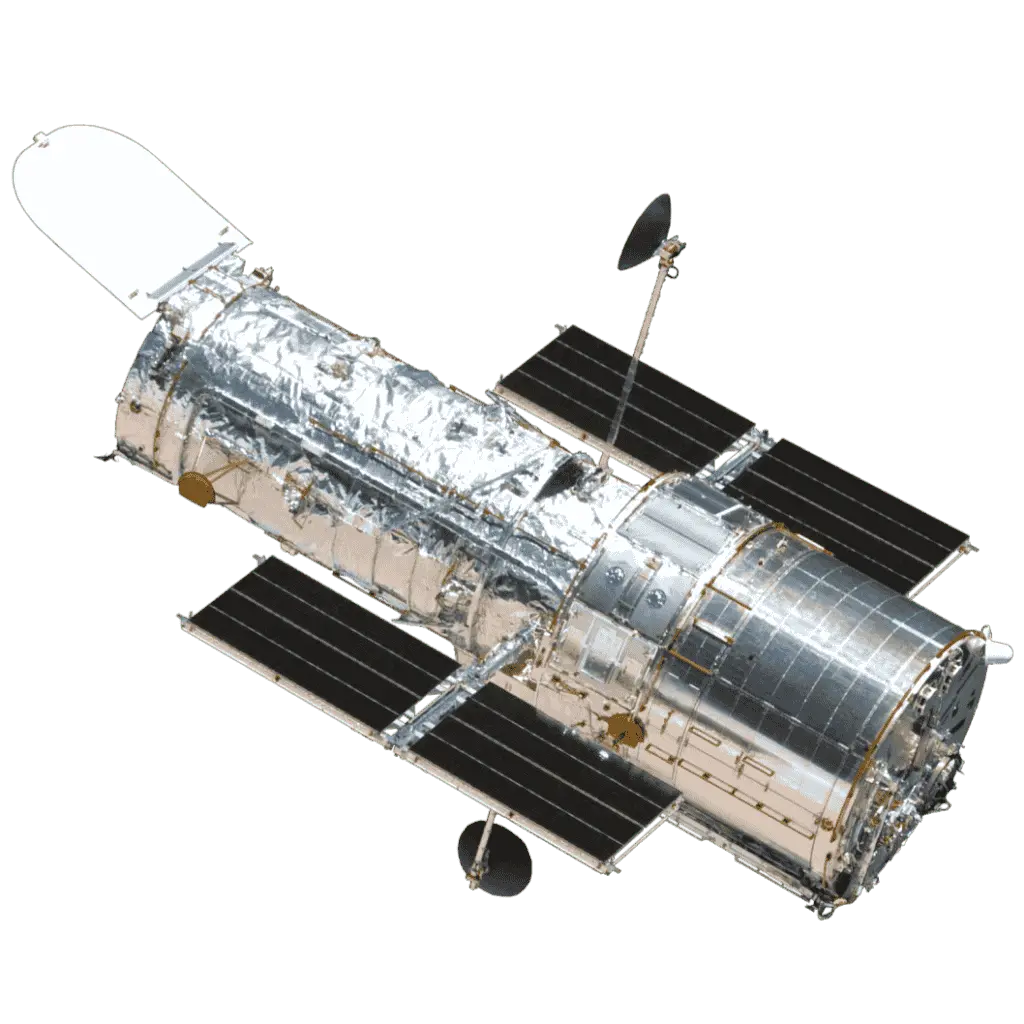
Not exactly. Hubble sees mostly visible light, while Webb sees infrared. They work together as a team. Think of Hubble as looking at the skin of the universe while Webb uses X-ray-like vision to see what’s hidden inside the dust clouds.
-
How far back in time can it see?
It can look back over 13.5 billion years. That’s almost all the way to the Big Bang. Because light takes time to travel, looking at distant objects is literally like watching a movie of the past. It sees the very first stars being born.
-
Can the James Webb Space Telescope see aliens?
It can’t see little green men or city lights. But it can ‘sniff’ the air on other planets. By looking for oxygen, methane, and water, it can tell us if a planet is capable of supporting life. That’s the closest we’ve ever come.
-
Where is the telescope located?
It’s sitting at L2, which is a stable gravity spot about 1.5 million kilometers away. It stays in line with Earth as we orbit the sun. This spot keeps the telescope away from the heat and light interference from both our planet and the moon.
Final Thoughts
We’re living in the golden age of discovery. Each image from the telescope is a gift to our curiosity. It reminds us that there’s still so much left to learn. The universe is a big place, but it’s finally starting to feel a little more like home. Don’t stop looking up, because the next big secret is already on its way to Earth’s antennas.