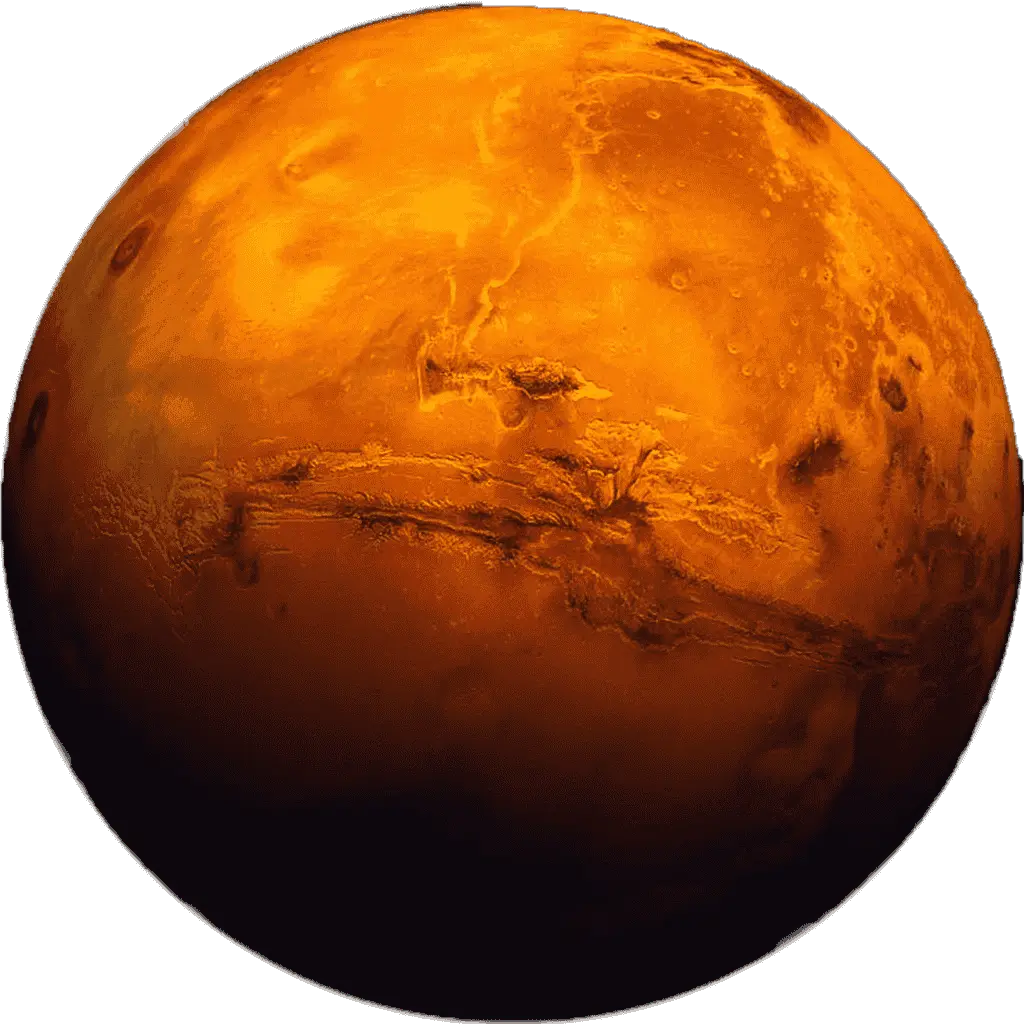
Iron oxide covers the surface of the Mars Planet, giving it that famous rusty hue. Humans have stared at this crimson dot for thousands of years, wondering if life exists in its dry riverbeds. It’s the fourth planet from the sun and sits about 142 million miles away on average. We’re looking at a world that’s half the size of Earth but holds the same amount of dry land. Studying this neighbor helps us understand how rocky worlds live and die.
Overview of Mars Planet
People often call it the Red Planet because its surface minerals rust. While it looks like a warm desert in photos, don’t let the colors fool you. It’s actually a freezing cold world where the average temperature stays around -80 degrees Fahrenheit. Thin air and a lack of a global magnetic field mean radiation hits the surface hard. It’s a harsh environment for anything to survive without protection.
Formation and Evolution of the Mars Planet
Our solar system formed 4.6 billion years ago. Mars took shape from gas and dust during this chaotic era. Gravity pulled materials together to form a rocky core. During its youth, the planet had a thicker atmosphere and liquid water. Something went wrong about 3.5 billion years ago. Scientists believe the planet’s core cooled, which killed its protective magnetic field. Solar winds then stripped the air away, leaving the world we see today.
Structure and Composition of Mars
At the center sits a dense core made of iron, nickel, and sulfur. It doesn’t spin fast enough to create a strong magnetic dynamo like Earth’s. Above that lies a rocky mantle, followed by a crust of basalt and dust. When I analyzed HiRISE imagery from the NASA Mars Reconnaissance Orbiter, I noticed that these layers tell a deep story. Crustal thickness varies wildly between the northern and southern hemispheres. This suggests a history of massive impacts or internal shifts we still don’t fully grasp.
Rotation, Orbit, and Temperature Extremes
A day on Mars is called a ‘sol,’ and it’s slightly longer than an Earth day at 24 hours and 37 minutes. Its year lasts 687 Earth days. Since the planet has a tilted axis, it experiences seasons just like we do. These seasons are twice as long and much more brutal. Near the poles, temperatures can drop to -195 degrees Fahrenheit in winter. Carbon dioxide actually freezes out of the air, turning into solid dry ice on the ground.
Surface Features of Mars
Geology here happens on a massive scale. You’ll find Olympus Mons, the largest volcano in the solar system. It’s three times the height of Mount Everest. Its base covers an area the size of Arizona. This happens because the planet doesn’t have plate tectonics. Hot spots in the mantle stay in one place for millions of years, piling lava onto the same spot.
The Valles Marineris canyon system is just as shocking, and it stretches over 2,500 miles, long enough to span the entire United States. If you stood at the bottom, the walls would rise four miles above you. It makes our Grand Canyon look like a small crack. Dust storms can sometimes grow until they swallow the entire world for months. These events change the terrain quickly, hiding or revealing ancient rock layers.
Exosphere and Magnetic Field
It has an extremely thin atmosphere, mostly made of carbon dioxide. The air pressure is less than 1% of Earth’s at sea level. If you stood there without a suit, your blood would literally boil from the lack of pressure. There’s no global magnetic field to stop solar particles. Instead, there are small ‘crustal magnets’ in the southern hemisphere. These frozen bits of magnetism are remnants of a field that died billions of years ago.
How Mars Planet Compares to Other Planets
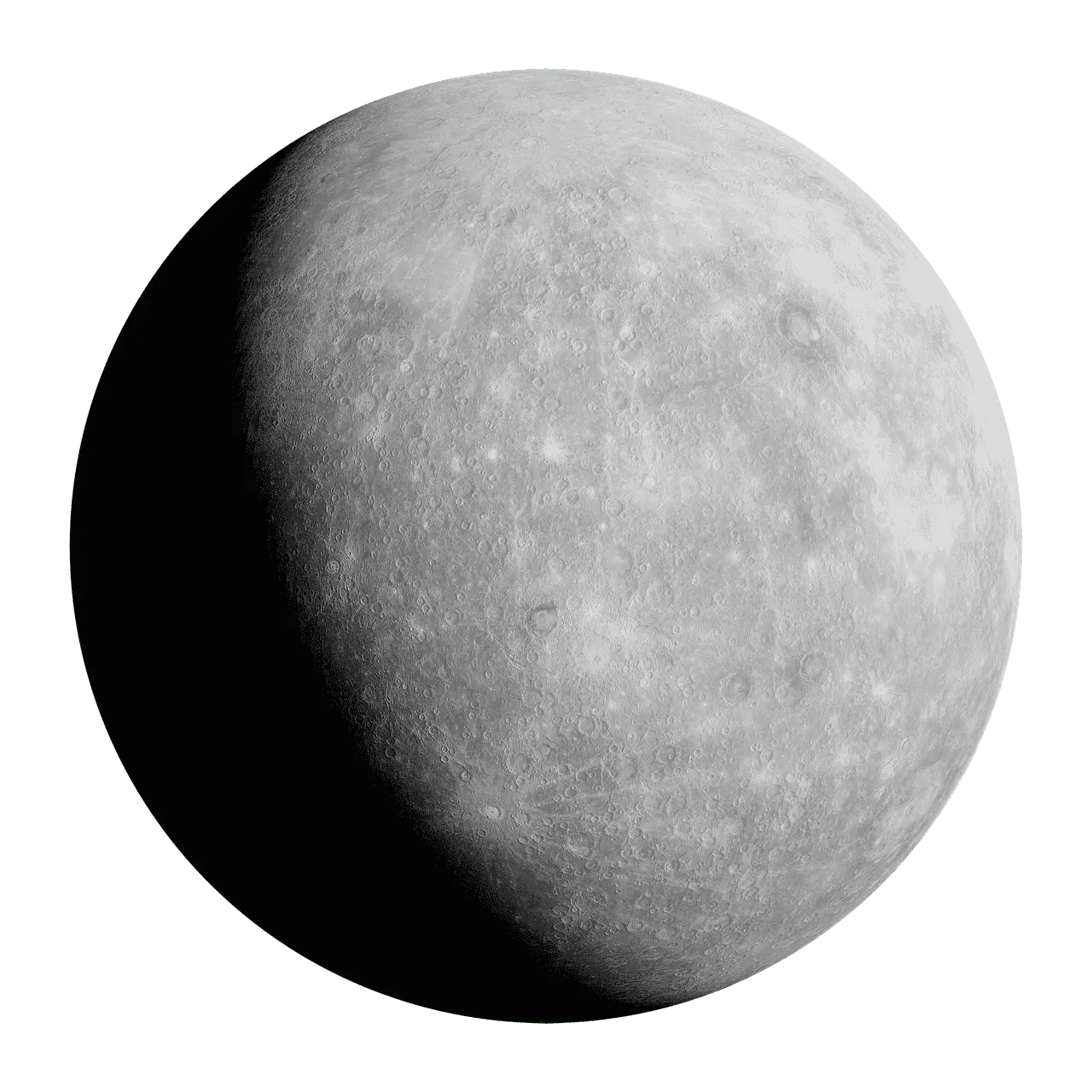
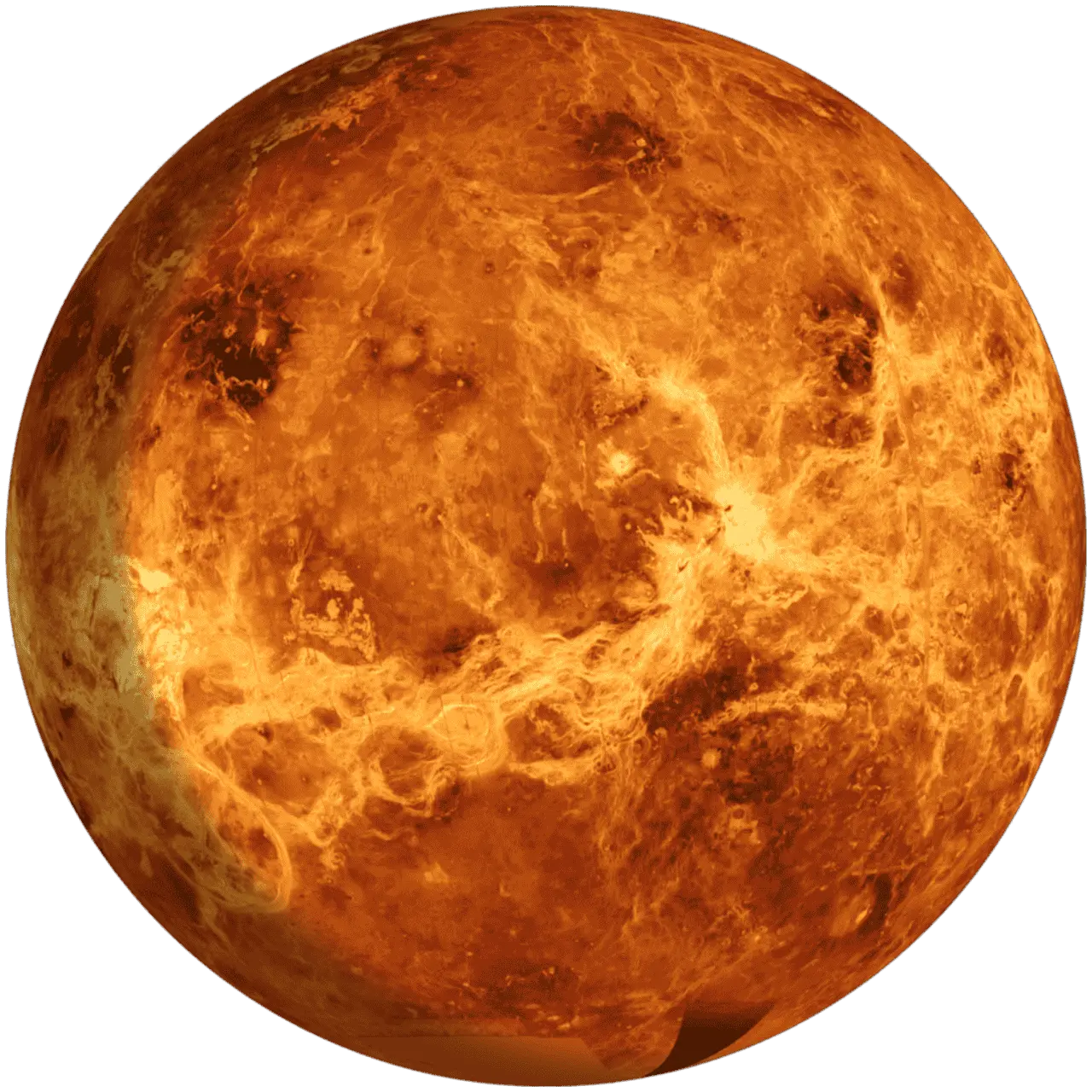
Among the four inner rocky worlds, Mars is the most ‘Earth-like’ despite the cold. Venus is too hot to touch. Mercury has no air at all. Our red neighbor sits in the ‘Goldilocks Zone,’ where life could have started. Unlike Earth, it lacks the ‘Geologic Reset Button’ of shifting tectonic plates. This means the ground on Mars preserves a record of the early solar system that Earth has long ago erased. It’s a time machine made of red dust.
Key Facts and Figures
- Diameter: 4,220 miles (roughly 53% of Earth).
- Gravity: 38% of Earth’s pull. You’d feel light and springy.
- Atmosphere: 95% Carbon Dioxide, 2.6% Nitrogen, 1.9% Argon.
- Moons: Two small, lumpy rocks named Phobos and Deimos.
- Distance: On average, it’s 1.5 Astronomical Units (AU) from the Sun.
- Liquid Water: Flows rarely on the surface as briny streaks.
Exploration of the Mars Planet
Humans have sent dozens of robotic explorers to find signs of life. Curiosity and Perseverance are the latest superstars. These rovers are mobile labs. They’re drilling into rocks to see if ancient microbes once lived in Gale Crater. In my own research, I’ve spent hours reviewing sedimentary patterns from these missions. The evidence for ancient river systems is undeniable. We can clearly see where water carved through the earth-like rocks ages ago.
Latest discoveries include the Ingenuity helicopter. It proved that flight is possible in very thin air. Recent seismic data from the InSight lander suggests the interior isn’t as ‘dead’ as we thought. Small marsquakes happen regularly, and this means there’s still heat trapped inside. Every mission brings us closer to sending humans there.
Why Mars Matters
Survival of the human race might depend on us becoming multi-planetary. This world is the logical first step. It has enough gravity for healthy bodies and resources we can use. We can split CO2 into oxygen. We can mine subsurface ice for drinking water and rocket fuel. It’s not just about a ‘Plan B,’ though. Learning why Mars lost its oceans helps us protect the ones we have left on Earth.
FAQs About Planet Mars
-
Can you breathe the air on Mars?
No. The atmosphere is mostly carbon dioxide and very thin. You’d need an oxygen tank and a pressurized suit.
-
Is there water on the Mars Planet?
Yes, but mostly as ice. It hides at the poles and deep underground. Small amounts of salty water sometimes appear on the surface for short periods.
-
How long does it take to get there?
Usually between six to nine months. The timing depends on how Earth and Mars align in their orbits.
-
What color is the Martian sky?
During the day, it’s a butterscotch or pinkish color. Interestingly, the sunsets appear blue to human eyes.
-
Does Mars have seasons?
It does. Because of its tilted axis, the planet goes through spring, summer, fall, and winter. They last twice as long as Earth’s seasons.
Final Thoughts
Exploring the Mars Planet is the great adventure of our time. It’s a bridge between our current home and the rest of the solar system. We’ve gone from looking through blurry telescopes to flying drones through its canyons. The Red Planet is no longer a mystery. It’s a destination. With every sol that passes, we’re finding more reasons to go there in person.