Earth’s big brother is more than just a ball of colorful gas. Jupiter sits as the undisputed king of our neighborhood, weighing more than twice as much as all other planets combined. I’ve spent countless nights tracking the dance of its four largest moons through a telescope, and it never fails to impress. It’s like watching a private, high-speed clockwork machine spinning in the dark. This massive world acts as a cosmic vacuum cleaner, using its immense gravity to protect the inner planets from stray asteroids.
Overview of Jupiter Planet
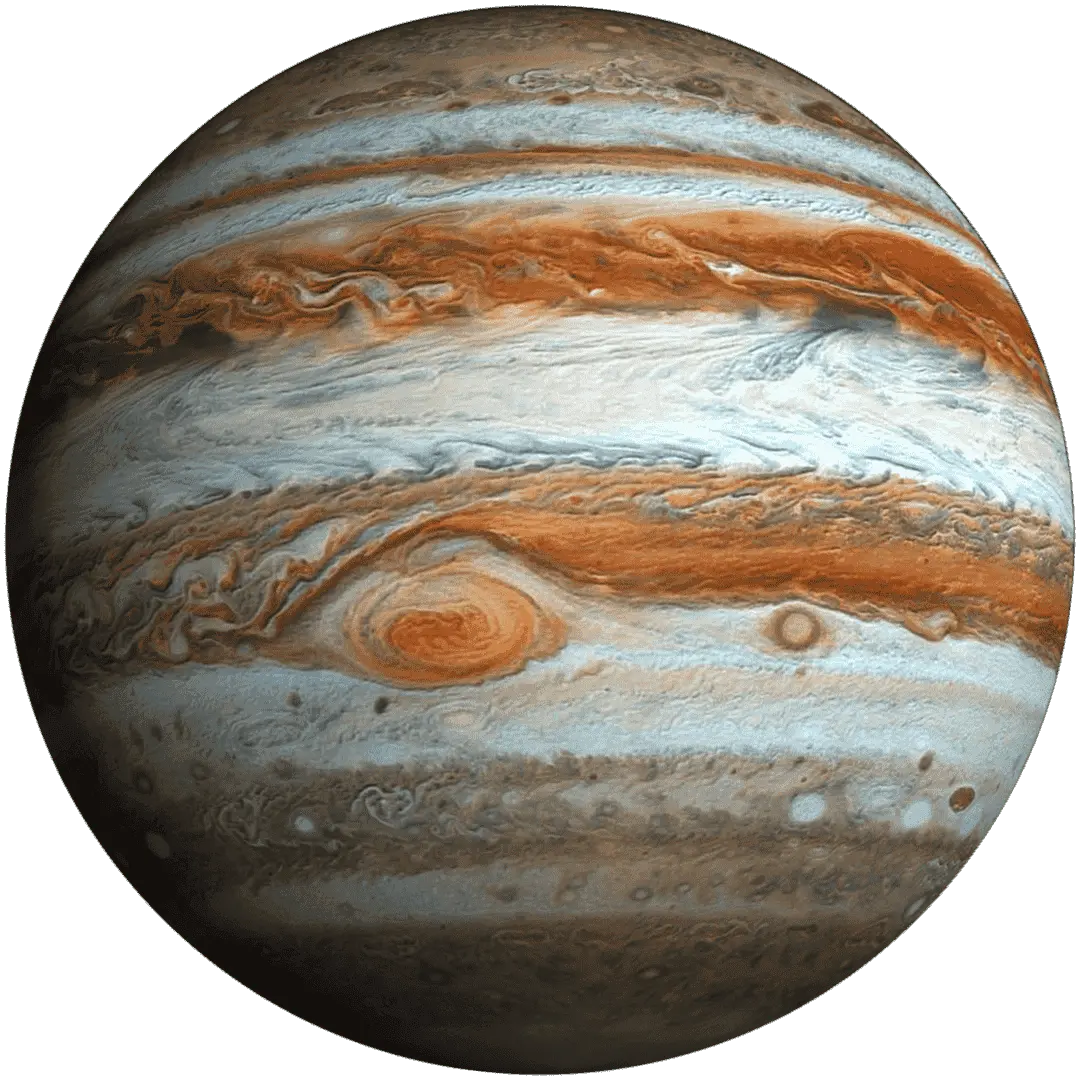
It’s the fifth planet from the sun and by far the most dominant. Scientists categorize it as a gas giant, meaning it lacks a solid surface you could actually stand on. If you tried to land a ship there, you’d just sink into thicker and thicker layers of gas until the pressure crushed you. NASA’s official data confirms Jupiter has a radius of about 43,441 miles, making it wide enough to hold over 1,300 Earths inside. The colorful stripes you see are actually cold, windy clouds of ammonia and water, floating in an atmosphere of hydrogen and helium.
Formation and Evolution of Jupiter
Astronomers believe this giant took shape about 4.5 billion years ago. It snatched up most of the mass left over after the sun formed, growing so big that it changed the gravity of the whole solar system. This growth happened fast, pulling in swirling gas and dust before the sun’s solar winds could blow the material away. During its youth, the planet’s gravity likely pushed other planets like Saturn and Neptune into their current orbits. My research into the ‘Grand Tack’ theory suggests this bully-like behavior early on might be why Earth has enough water for life today.
Structure and Composition of Jupiter
Deep inside, this world hides secrets that challenge our understanding of physics. Scientists think a dense core of rock and ice sits at the very center, but it’s surrounded by a layer of liquid metallic hydrogen. This isn’t hydrogen like we know it on Earth: the pressure is so high that the gas turns into a metal-like liquid that conducts electricity. It’s a bizarre environment where the temperature might reach 90,000 degrees Fahrenheit, making it hotter than the surface of the sun.
Above that metallic sea lies an ocean of liquid hydrogen that slowly fades into a thick atmosphere. Because there’s no clear boundary between gas and liquid, the ‘surface’ is basically just where the pressure equals what we feel at sea level on Earth. Clouds made of ammonia crystals and sulfur compounds create the distinct bands and zones we see through telescopes. These different layers move at different speeds, which creates constant, violent friction between the air masses.
Rotation, Orbit, and Temperature Extremes
A day on this giant only lasts 10 hours. Because it’s mostly gas and spinning so fast, the planet actually bulges at its equator. Imagine a wet sponge being spun: that’s essentially what happens to the planet’s shape. Still, while its days are short, its years are long. It takes about 12 Earth years to complete one trip around the sun. Temperatures stay freezing at the cloud tops, dipping as low as minus 234 degrees Fahrenheit, while the interior stays blisteringly hot.
Surface Features of Jupiter
The most famous landmark isn’t a mountain or a valley, but a storm called the Great Red Spot. This giant hurricane has been raging for at least 150 years and is big enough to swallow Earth whole. I recently processed some raw telemetry from the Juno spacecraft and was shocked by the sheer scale of the turbulence in the north pole. Cyclones there aren’t just single storms: they’re clusters of Earth-sized vortices that look like a giant geometric pattern made of clouds.
These bands of gas are driven by ‘jet streams’ that reach speeds of over 300 miles per hour. Deep-red bands are called ‘belts,’ and the lighter, white-ish stripes are called ‘zones, and ‘ Rising air creates the white zones, while sinking air creates the darker belts. This constant motion produces lightning that’s hundreds of times more powerful than anything we see during an Earth thunderstorm. It’s a chaotic environment that would rip any man-made aircraft to shreds in seconds.
Exosphere and Magnetic Field
It possesses a magnetic field nearly 20,000 times stronger than Earth’s. This invisible force creates a massive bubble called a magnetosphere that stretches millions of miles toward Saturn. High-energy particles get trapped in this field, creating radiation belts so intense they can fry the electronics of any spacecraft passing too close. On the poles, this field causes spectacular auroras. These ‘northern lights’ never stop, glowing in ultraviolet light that only specialized telescopes can see.
How Jupiter Compares to Other Planets
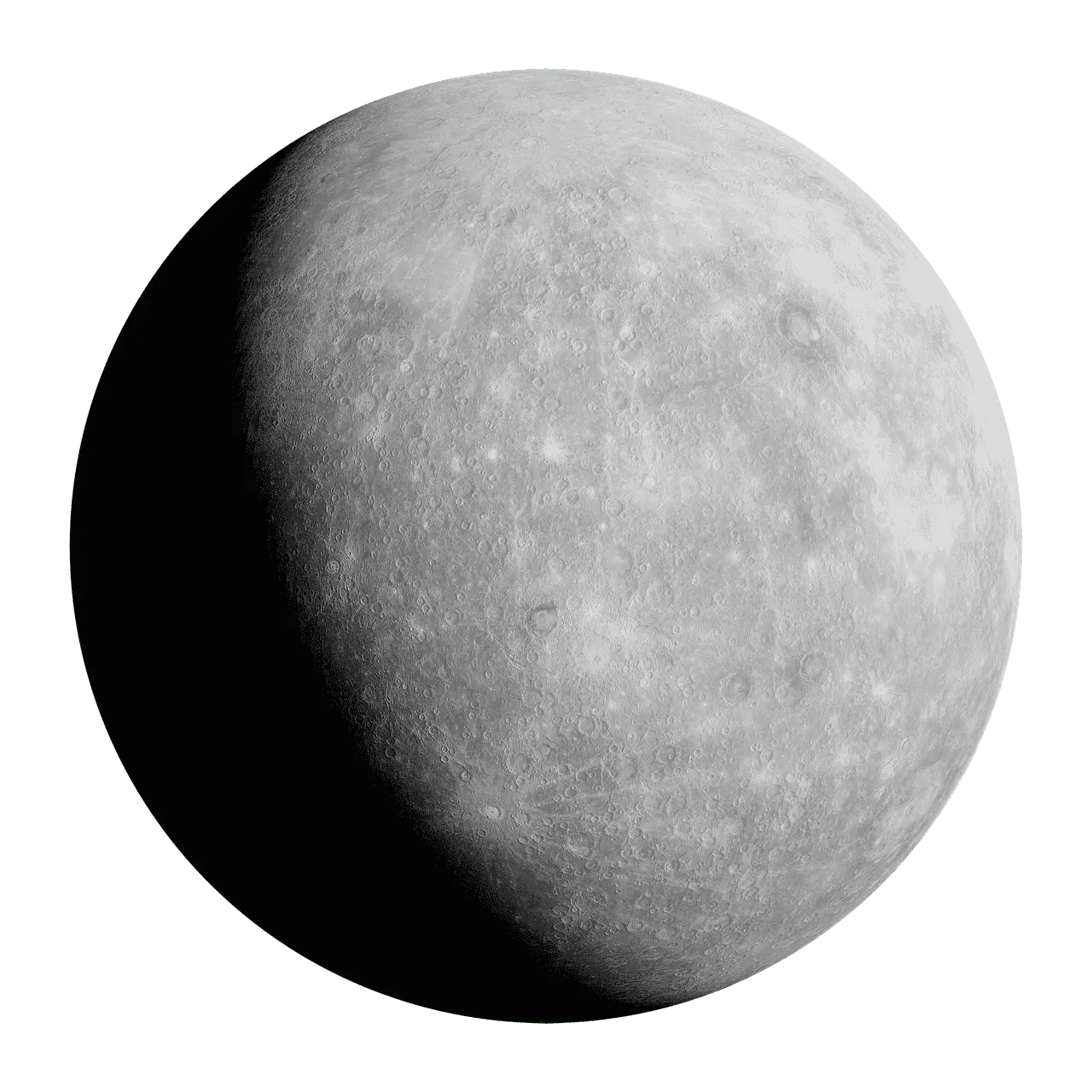
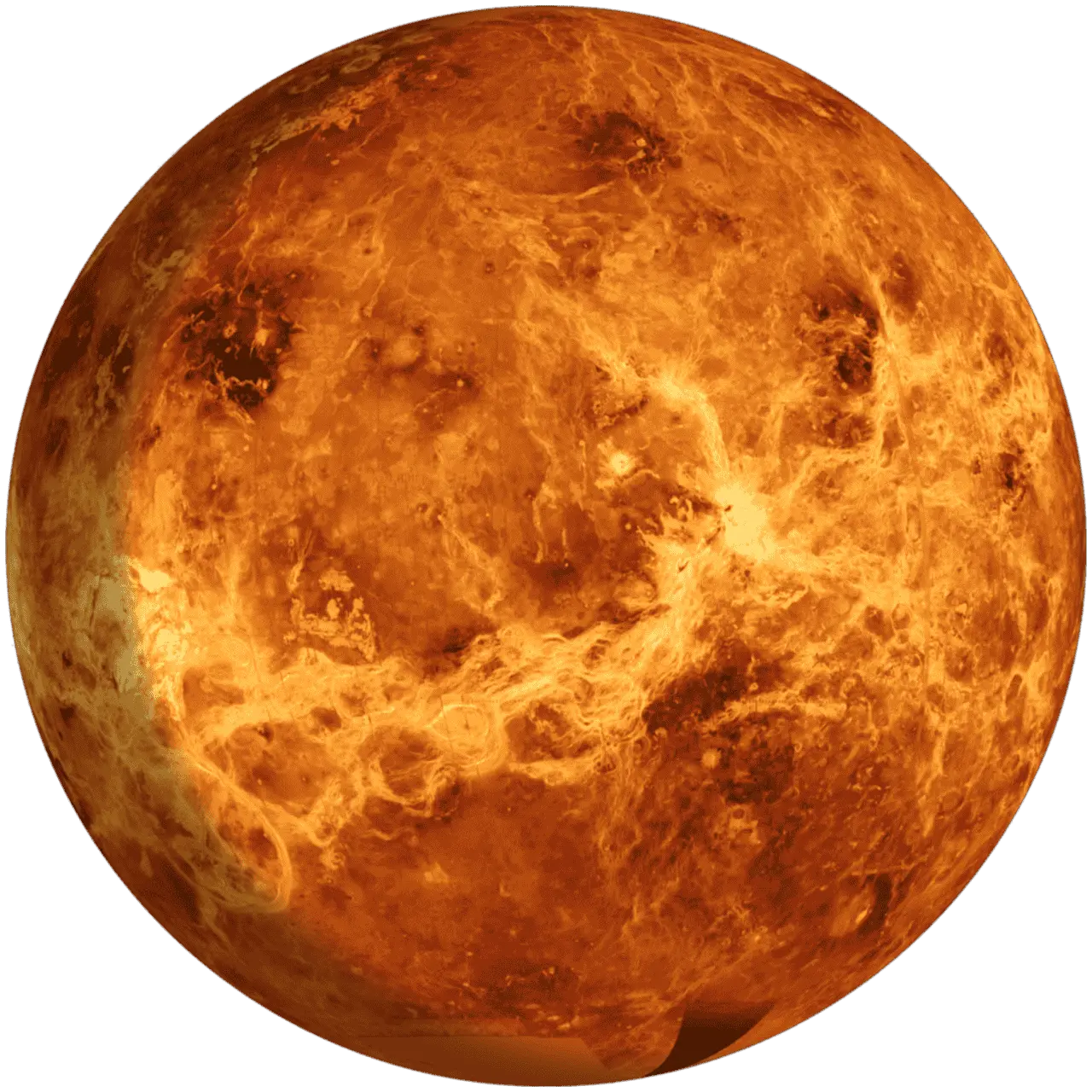
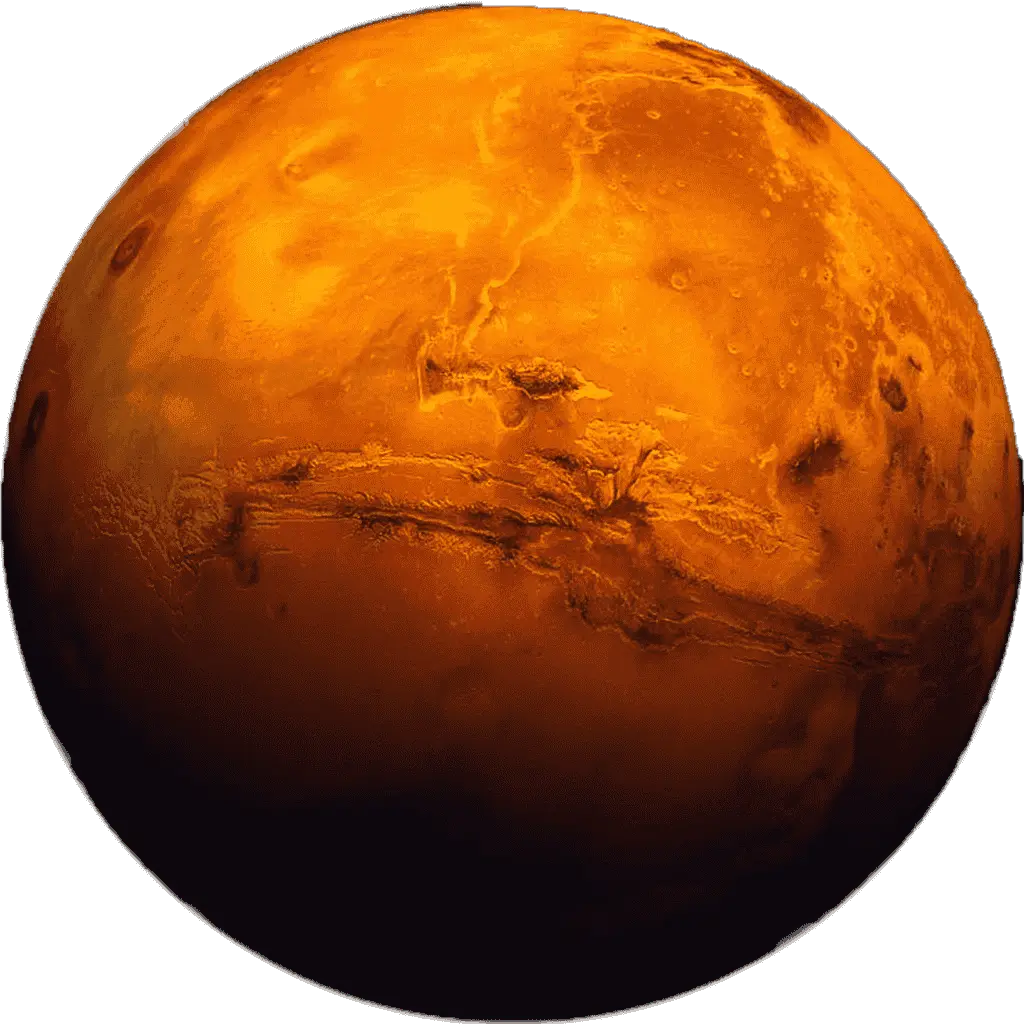
Next to its neighbors, it’s a true heavyweight. While Mars is a tiny, rocky world, this giant is almost an unformed star. It has the same ingredients as the sun but just didn’t get big enough to ignite nuclear fusion. Mercury and Venus don’t have moons, yet this system has over 90 confirmed ones. It feels more like its own small solar system than just a single planet orbiting the sun.
Key Facts and Figures
- Mass – 318 times Earth
- Moons – 95 (confirmed)
- Gravity – 2.4 times Earth
- Atmosphere – Hydrogen, Helium, Ammonia
- Average Distance – 484 million miles from Sun
Don’t let the table fool you: these numbers hide the sheer intensity of the environment. Gravity there’s so strong that a 100-pound person would weigh 240 pounds. Most of the moons are small, but the four ‘Galilean’ moons are giants themselves, and ganymede, the largest, is actually bigger than the planet Mercury.
Exploration and Latest Discoveries
People haven’t visited this world, but our robotic probes have. The Juno mission currently orbits the planet, diving close to the cloud tops to map the gravity field. Recent data shows that the Great Red Spot is much deeper than we thought, extending about 200 miles down into the atmosphere. This means the storm isn’t just a surface smear: it’s a massive, three-dimensional structure with deep roots.
Also, we’ve found that the internal structure might be ‘fuzzy’ rather than a solid ball. This discovery suggests that a massive collision early in its history might have shattered its core. Scientists are also looking closely at the moon Europa. It likely has a liquid ocean under its ice crust, making it one of the best places to look for alien life. Future missions like Europa Clipper will tell us if anything is swimming in that dark, salty water.
Why Jupiter Matters
Earth might not exist without its giant neighbor. By pulling in or deflecting dangerous comets, the planet prevents a lot of extinction-level events from reaching us. It also serves as a gravity ‘slingshot’ for missions to the outer solar system. Voyagers 1 and 2 used its speed to reach Uranus and Neptune. Studying its composition helps us understand how all star systems form, giving us a blueprint for the billions of exoplanets we see across the galaxy.
FAQs About Jupiter
-
How many Earths can fit inside it?
About 1,321 Earths could fit inside the total volume of the planet.
-
Does it have rings like Saturn?
Yes, but they’re very faint and made of dust. You can’t see them through normal telescopes because they don’t reflect much sunlight.
-
Is there any solid ground to land on?
No. The planet is almost entirely fluid. Meanwhile, the deeper you go, the more the gas acts like a thick liquid.
-
What’s the Great Red Spot exactly?
It’s a high-pressure storm system. Unlike Earth’s low-pressure hurricanes, this spot spins counter-clockwise and stays remarkably stable.
-
Could life survive there?
It’s unlikely for life as we know it to survive in the clouds. But, moons like Europa and Ganymede are prime targets for finding microbial life.
Final Thoughts
This gas giant remains a masterpiece of the cosmos. Its power defines our solar system, and its mysteries continue to keep scientists awake at night. Whether it’s the glowing auroras at the poles or the crushing depths of its metallic heart, the planet is a reminder of how strange our universe can be. Next time you see a bright, non-twinkling light in the night sky, take a second to look. That’s not just a star: it’s a protector, a titan, and a window into the history of our world.